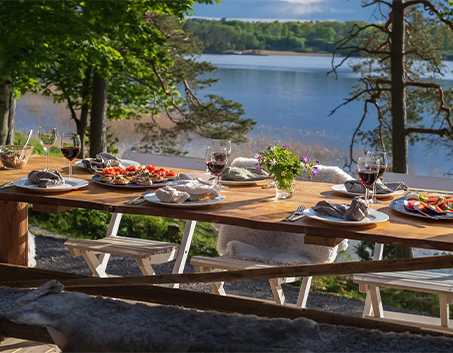

When looking at Dalsland, situated in western Sweden between Gothenburg and Oslo, on a map, the first thing that catches the eye is water rather than land. Long narrow lakes, meandering canals, coves nestling between forests, and small settlements unnoticed before approaching the shore… Here, water is not merely a detail accompanying the landscape. It is the main element that determines the roads, daily life, and rhythm of travel in the region.
Most people coming to Dalsland seek not the orderly urban life encountered in Sweden's major cities, but the calmer geography that begins just behind it. The museums of Stockholm, the restaurants of Gothenburg, or the familiar lines of Scandinavian design are not at the center of this journey. The program here is simpler: Waking up by the lake in the morning, paddling during the day, encountering art in an old industrial building, and listening to the sounds of the forest when evening comes.
The interesting side of Dalsland is that it feels no need to transform any of this into a grand narrative of adventure. The region builds its effect through small moments added together rather than majestic landscapes.
Traffic Thins After Gothenburg
One of the most practical starting points to reach Dalsland is Gothenburg. With a car rented from Landvetter Airport, the southern part of the region can be reached in about two hours. Setting out from Oslo, budgeting a similar amount of time is sufficient.
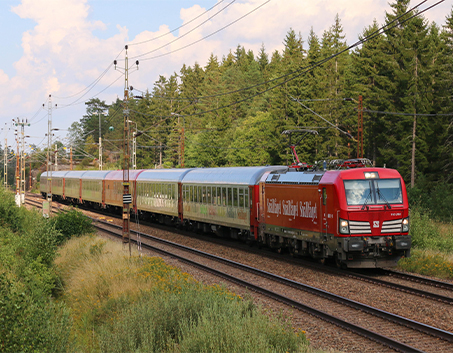
Although it is possible to arrive at centers like Åmål or Mellerud by train, an automobile provides significant freedom of movement in Dalsland. This is because the true character of the region reveals itself not on the main roads between towns, but on secondary routes extending to lakeshores, trailheads, and small villages.
There is no definitive threshold indicating that one has entered Dalsland. The change occurs slowly. Settlements become sparser, the forest approaches the edge of the road, and behind every opening visible among the trees appears another lake. While Lake Vänern, Sweden's largest lake, forms a wide border to the east, the large and small lakes inland turn the region into a fragmented water map.
Due to this diversity, Dalsland has been referred to as "Sweden in miniature" since the late 19th century. Plains, rocky elevations, forests, and lakes take each other's place within short distances. However, the region's small size does not mean it can be consumed quickly. Here, distances are measured not in kilometers, but by how frequently you stop along the way.
Before One Lake Ends, Another Begins
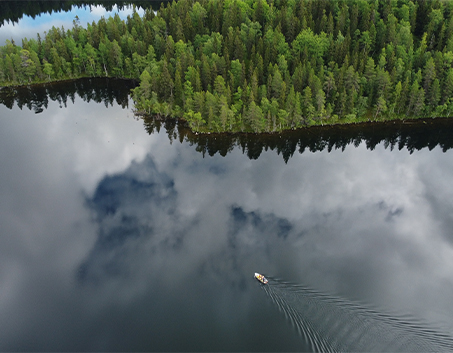
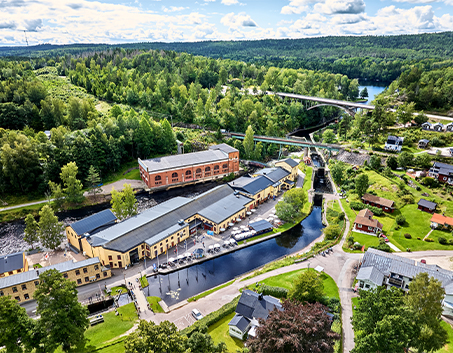
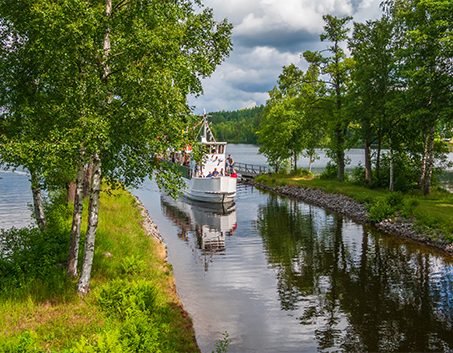
When the Dalsland Canal is mentioned, it is easy to imagine a continuous, man-made long waterway. Yet, the majority of the system consists of natural lakes. Out of the approximately 253-kilometer navigable water network, only 12 kilometers were formed by digging or blasting rocks. In the remaining section, lakes, coves, and narrow passages connect to one another.
Completed in 1868, the canal was initially used to facilitate the transport of iron and timber production in the region. Today, the same route sits at the center of journeys made by canoe, kayak, and small boats. The transformation of a system built for industry into one of the region's quietest travel experiences over time is one of the striking connections between Dalsland's past and present.
Historic passenger boats operating on the canal during the summer months offer a good alternative for those who wish to experience travel on water without paddling. However, most sailings take place between mid-June and late August. For autumn travel, boat schedules need to be checked in advance. In September, one encounters Dalsland in a quieter state; conversely, some summer businesses and transportation options may have closed for the season.
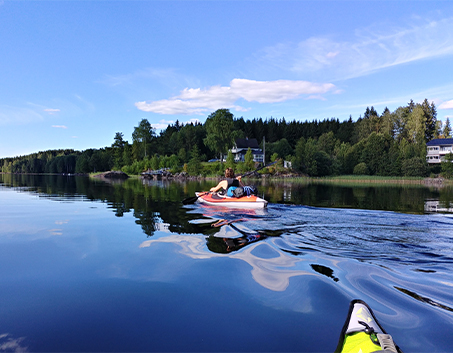
For those wishing to chart their own route, the primary area is the Dalsland–Nordmarken lake system in the north. Extending from Dalsland to southern Värmland and the Norwegian border, this region is considered one of Europe's most renowned canoeing destinations. Thanks to the long and narrow lakes, multi-day routes can be created without excessive exposure to the harsh conditions of open water.
First-time paddlers would do better to start with an experienced guide or a short, sheltered trail. Lake Råvarp, with its narrow structure and tranquil sections, is one of the suitable options for novice visitors. The presence of Bronze Age rock carvings on its shores lifts the lake beyond being merely a sporting course.
In Håverud, Roads Stack Upon Each Other
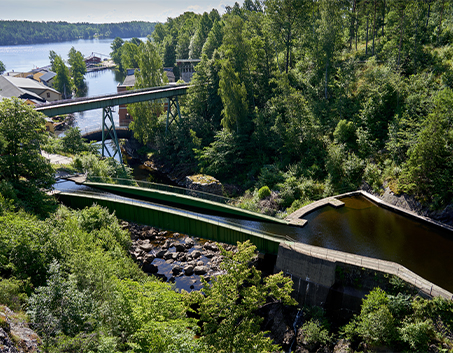
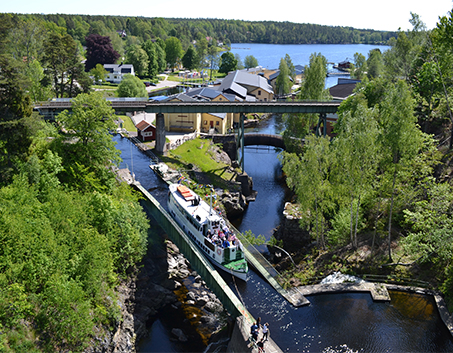
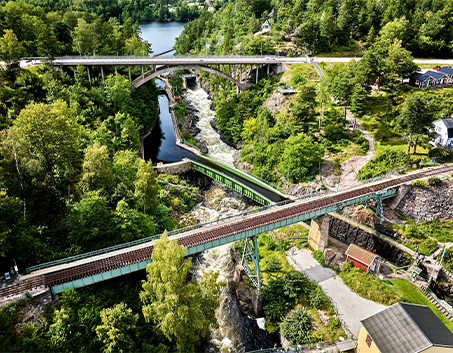
The most famous structure in Dalsland is the Håverud Aqueduct. What makes it interesting is not merely that it dates from the 19th century, but that transportation routes turn into almost an engineering spectacle here. The waterway, railway, and highway pass over one another at the same point from different heights.
When a conventional canal could not be built due to the region's harsh and unfavorable terrain, a solution transporting water over a metallic structure was developed. Today, watching boats pass over the aqueduct is one of the most characteristic moments of a Dalsland trip. The locks lined along the canal naturally slow the speed of the journey while lowering and raising boats across the elevation differences between lakes.
There is little reason to rush around Håverud. The Canal Museum is a good stop to understand the industrial and transport history of the region. Walks can be taken along the water; passing to Upperud a few kilometers away, the Dalsland Art Museum can be visited. Since some old lock-keeper houses are used for accommodation today, it is possible not only to observe the history of the canal, but also to spend a night within it.
During the summer season, routes combining boat and railbus operate between Håverud and Bengtsfors. Traveling via the canal in one direction and making the return journey on the old railway offers the opportunity to see two different faces of the region on the same day.
An Unexpected Lunch Break in an Old Paper Mill
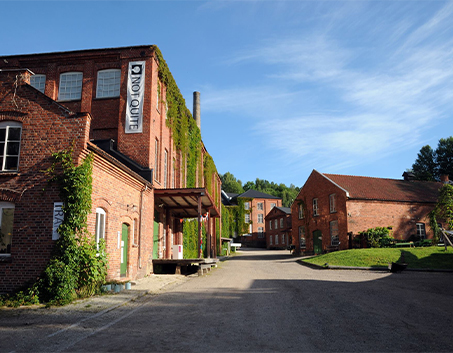
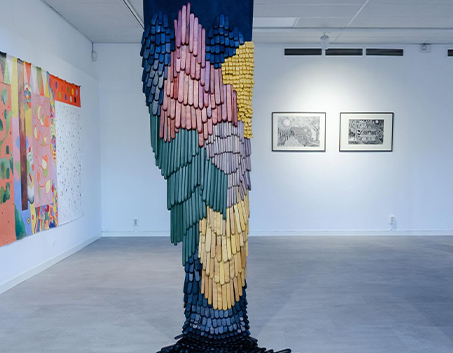
Upon arriving in Fengersfors, one realizes that Dalsland consists of more than just forests and lakes. The old paper mill here has transformed today into a cultural area named Not Quite, where artists, artisans, and designers work.
The industrial character of the structure has not been entirely erased. Stone walls, old production areas, and the traces left by the factory share the same space with exhibitions, workshops, and contemporary works. Therefore, Not Quite appears less like an ordinary art center imported to the countryside and more like a living production space shaped by its location.
Freshly baked bread from the oven, changing exhibitions, small design shops, and the courtyard dining area carry this venue beyond a brief visit. After spending a few days in Dalsland's nature, entering through the doors of an old factory and encountering such a vibrant creative environment is particularly impressive.
For those wishing to walk around Fengersfors, the Vandra i Ronjaland trails are also available. These paths pass through the terrain where some scenes of the adaptation of Astrid Lindgren's Ronja, the Robber's Daughter were filmed. Although the rocks, caves, small pools, and forest passages give the impression of a set out of children's literature, the appeal of the routes does not stem solely from their cinematic connection. It is one of the best ways to reach the lesser-known hiking areas of the region.
Dalsland's Highest Point Is Just 301 Meters
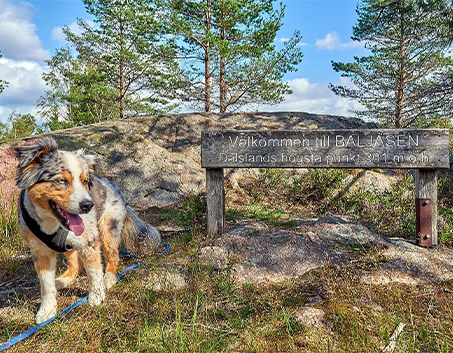
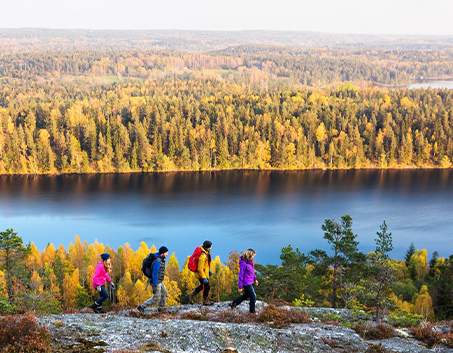
To reach a good view in Dalsland, climbing high mountains is unnecessary. Baljåsen, the highest point of the region, stands merely 301 meters above sea level. Still, thanks to the surrounding terrain, it forms a natural viewpoint offering a wide vista over the lakes and forests.
Those looking for more prominent rocky surfaces can head toward Sörknatten. The hiking trail advancing over the rocks is particularly suitable for watching the changing colors of the landscape toward the end of the day. This is also one of the geographies that inspired the works of painter Otto Hesselbom, born in Dalsland.
For a longer and quieter hike, Tresticklan National Park near the Norwegian border stands out. With an area of approximately 30 square kilometers, it is one of southern Sweden's largest roadless and undeveloped forest areas. Along the trails progressing among narrow ridges, bogs, pine forests, and lakes, hours can be spent without encountering any settlement.
Being prepared when going to Tresticklan is important. It must be taken into account that phone connections may weaken, weather conditions can change rapidly, and service points within the park are limited. Though Dalsland's nature appears easily accessible, the duration of daylight and the wetness of the trails directly affect route planning, especially in autumn.
Stepping on Cobblestones Again in Åmål
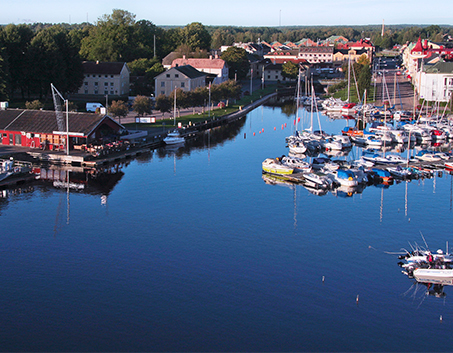
After a few days spent in the forest and on the water, Åmål signifies a return to urban life, albeit on a small scale. Situated on the shores of Lake Vänern, Åmål is considered Dalsland's only city. With its harbor, preserved old center, small shops, and dining options, it is a good stop at the beginning or end of the route.
Åmål's place in cinema history is somewhat ironic. Although the 1998 film Fucking Åmål takes its name from this small city, most of the filming took place elsewhere. While the film depicts Åmål as a boring town young people wish to escape from, today's visitors come here precisely to get away from the pace of big cities.
Nearby Bengtsfors is one of the important starting points for canal journeys. The Gammelgården Open-Air Museum on Majberget narrates the region's past through its collection of historic rural buildings. Halmens Hus, located on the same hill, is an unusual museum reminding visitors of Dalsland's former place in straw hat production and export. This small detail demonstrates that the region is too multi-layered to be read solely through timber and waterways.
There Are Several Ways to Stay in the Forest
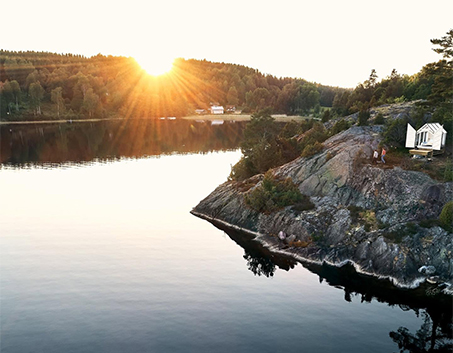
Accommodation in Dalsland is not a technical decision left outside the itinerary; it is an essential part of the experience. Choices can be made between lakeside cabins, old country houses, small guesthouses, and glass cabins.
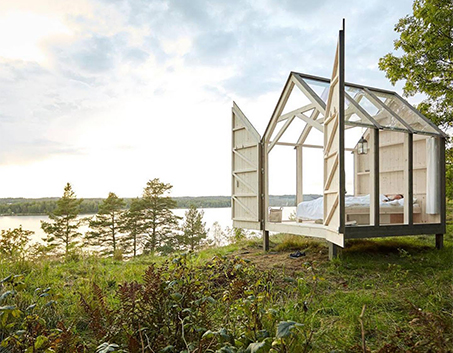
One of the experiences that made the region visible on an international scale is the 72 Hour Cabin project. Built upon participants spending three days in small, largely glass cabins in the forest, the study aimed to observe the impact of time spent in nature on stress. The resulting cabins are still among the accommodation styles associated with Dalsland today.
However, staying in a glass room is not strictly necessary for a good Dalsland experience. A simple breakfast prepared with local bread, homemade jam, seasonal berries, and coffee roasted nearby can convey the region's spirit just as well. In late summer and early autumn, berries such as blueberries, lingonberries, and yellow cloudberries can be found in the forests. If foraging from nature, it is essential to recognize edible species and pay attention to the rules of private properties and protected areas.
Sweden's right of public access, known as Allemansrätten, grants visitors the freedom to roam in nature and camp for short periods under specific conditions, including on private land. In return, the expected principle is simple: Do not disturb, do not destroy. Responsibilities such as adhering to fire restrictions, leaving no trash, keeping distance from homes, and obeying special rules of protected areas are integral parts of this freedom.
Can Three Days Be Enough for Dalsland?
A three-day trip can be sufficient to get acquainted with the region. On the first day, setting off from Gothenburg, Håverud and Upperud can be seen, with the night spent around Fengersfors. On the second day, following a visit to Not Quite, a short Ronjaland hike can be taken; the remainder of the day can be reserved for canoeing on Råvarp or relaxing by the lake. On the third day, one can return to Gothenburg via Bengtsfors and Åmål.
Those wishing to add Tresticklan National Park to the schedule should set aside at least one more day. For those planning a canoe trip with overnight stays, four or five days is a more balanced duration. Trying to squeeze everything into a single itinerary in Dalsland contradicts the experience the region offers. Because the main issue here is not how many lakes were seen, but how long you stayed on the shore of one lake.
September is a period when forests begin to change colors, summer crowds recede, and evenings become noticeably cooler. Waterproof clothing, layered garments, and water-resistant footwear should be essential items in the suitcase. Since canoeing and boating activities may be restricted depending on weather conditions, reservations should be verified in advance.
When leaving Dalsland, no single monument or square remains in mind. Rather, one remembers the sound of water trickling off the tip of a paddle, a small boat waiting in a lock between two lakes, the stone walls of an old factory, or an unnamed path inside the forest.
Perhaps this is the truest summary of the region: In Dalsland, the journey consists of what happens while traveling from one place to another. And indeed, most of the way passes through water.